The World of Isopods
Red Ghost Rider Millipede
Red Ghost Rider Millipede
Couldn't load pickup availability
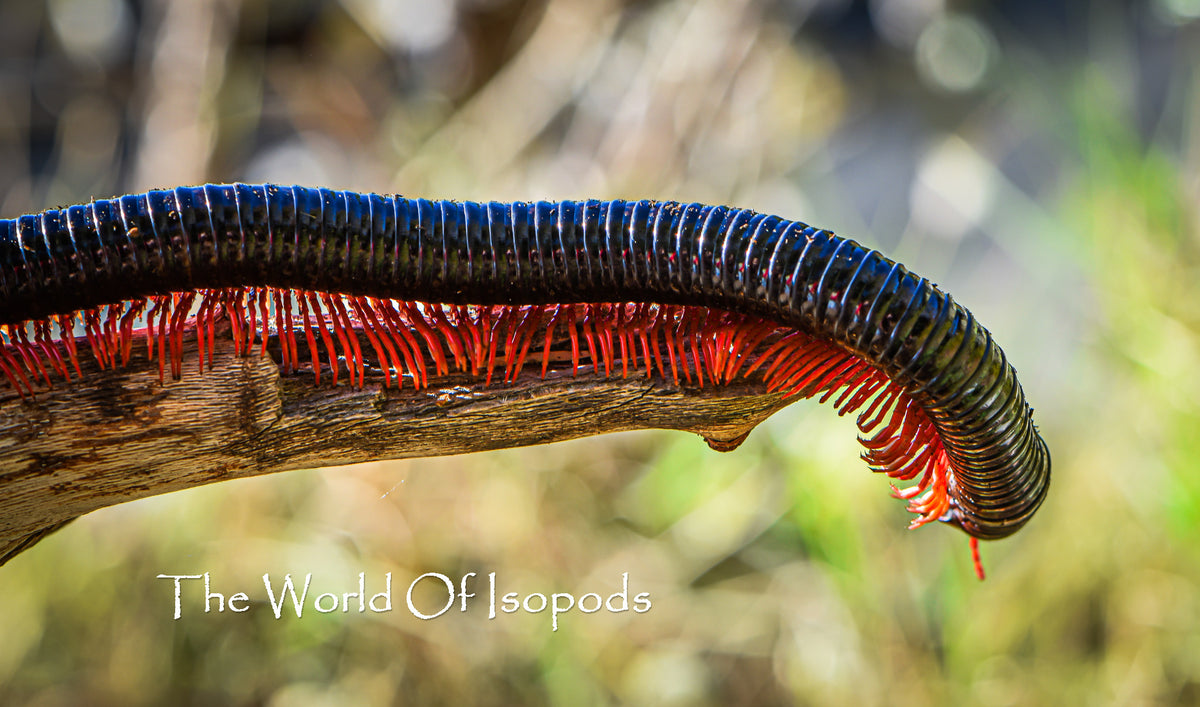
Red Leg Ghost Rider Millipede (Alienostreptus bicoloripes)
The Red Leg Ghost Rider millipede is a large, tropical millipede associated with the Central Highlands of Vietnam. It is identified by its cylindrical, segmented black body and contrasting bright red legs. It is sold under the common name “Red Ghost Rider” and is listed under the scientific name Alienostreptus bicoloripes by specialist sellers. The species is relatively new to the invertebrate hobby, so some biological and husbandry information remains limited.
Care Information
-
Humidity: Keep the lower substrate consistently moist, but not waterlogged. Provide a moisture gradient with a drier upper surface.
-
Ventilation: Provide airflow through lower and upper ventilation openings to reduce stagnant, excessively damp conditions.
-
Enclosure: Use a secure enclosure with deep substrate for burrowing and branches or cork bark for climbing.
-
Substrate: Use organic soil mixed with decaying hardwood and leaf litter. The substrate should retain moisture while allowing excess water to drain.
-
Diet: Primarily feeds on decaying leaves, rotting hardwood, and other decomposing plant material. Supplementary vegetables may also be offered.
-
Temperature: Species-specific temperature requirements are not firmly established in published research. Avoid temperature extremes and sudden changes.
-
Habitat structure: Provide leaf litter, bark, and sturdy climbing surfaces, along with enough deep substrate for burrowing and moulting.
-
Adult size: Specialist sellers report approximately 9–11 inches (23–28 cm) in length.
-
Behavior: Can burrow into the substrate and climb over bark and branches. It may spend considerable time hidden, particularly while moulting.
-
Handling: Handling should be minimized because falls can injure millipedes. Like other millipedes, it may release defensive secretions when disturbed.